
Choosing the Right Trailer Hitch for Your Rig
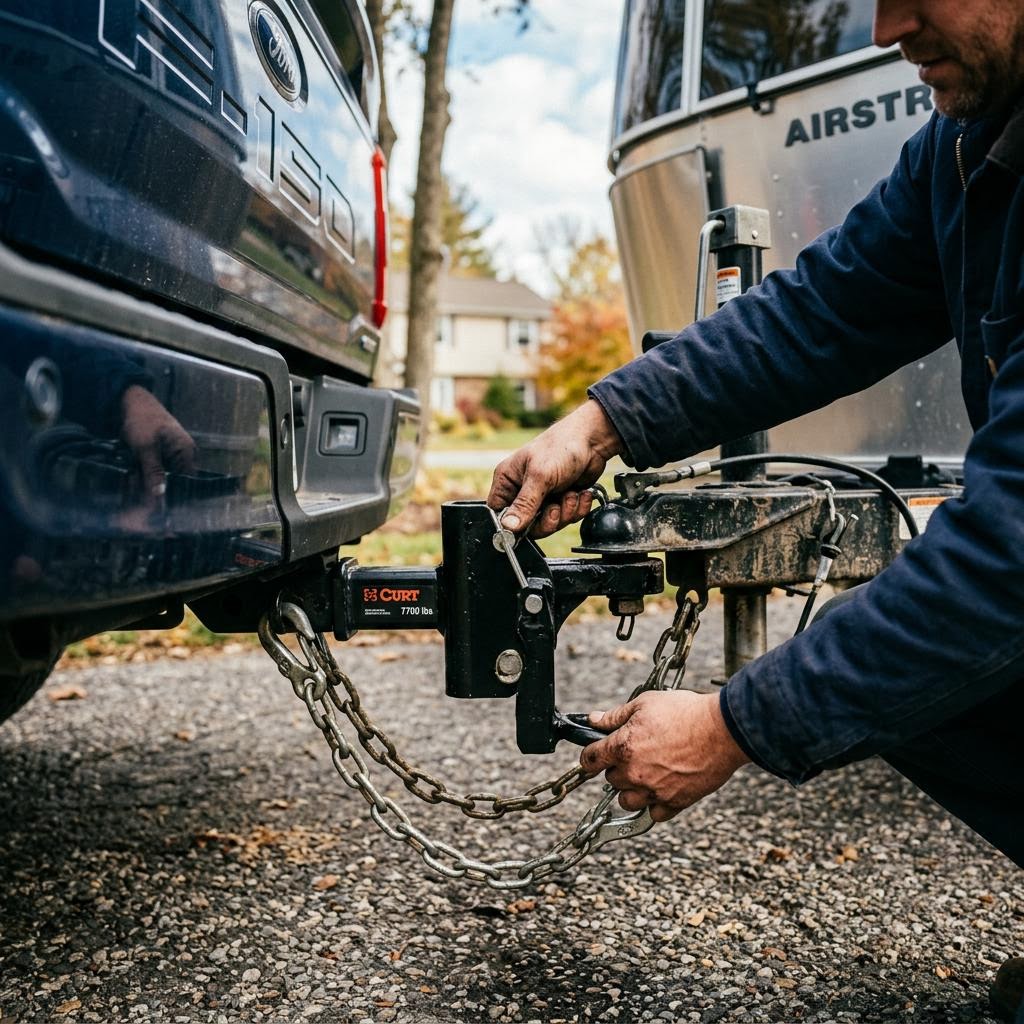
The right hitch is not about buying the biggest one you can find — it is about matching the hitch class, tongue weight capacity, and hitch type to both your tow vehicle and your trailer. Get this wrong and you risk sway, poor braking, or damage to your vehicle's frame.
Hitch classes range from Class I (up to 2,000 lbs gross trailer weight, common on sedans) through Class V (up to 20,000 lbs, for heavy-duty trucks). Check your tow vehicle's owner manual for its rated towing capacity, then choose a hitch class that meets or exceeds both your trailer's loaded weight and its tongue weight, which is typically 10-15% of the total.
For travel trailers over about 5,000 lbs, a weight-distribution hitch is worth the investment. It uses spring bars to transfer tongue weight back to the tow vehicle's front axle and the trailer's axles, keeping the ride level and dramatically improving steering and braking control compared to a standard ball mount.
Heavier trailers, especially fifth-wheels, move the connection point into the truck bed with a gooseneck or fifth-wheel hitch. These put the pivot point over or ahead of the rear axle, which improves stability at highway speeds and tightens your turning radius compared to a bumper-pull setup.
Whichever hitch you choose, always pair it with rated safety chains crossed underneath the coupler, a properly adjusted breakaway cable, and correctly torqued hardware. A hitch is only as strong as its weakest connection point — check chains, pins, and welds every trip.