Marine Electronics 101: Navigation Basics for New Boaters
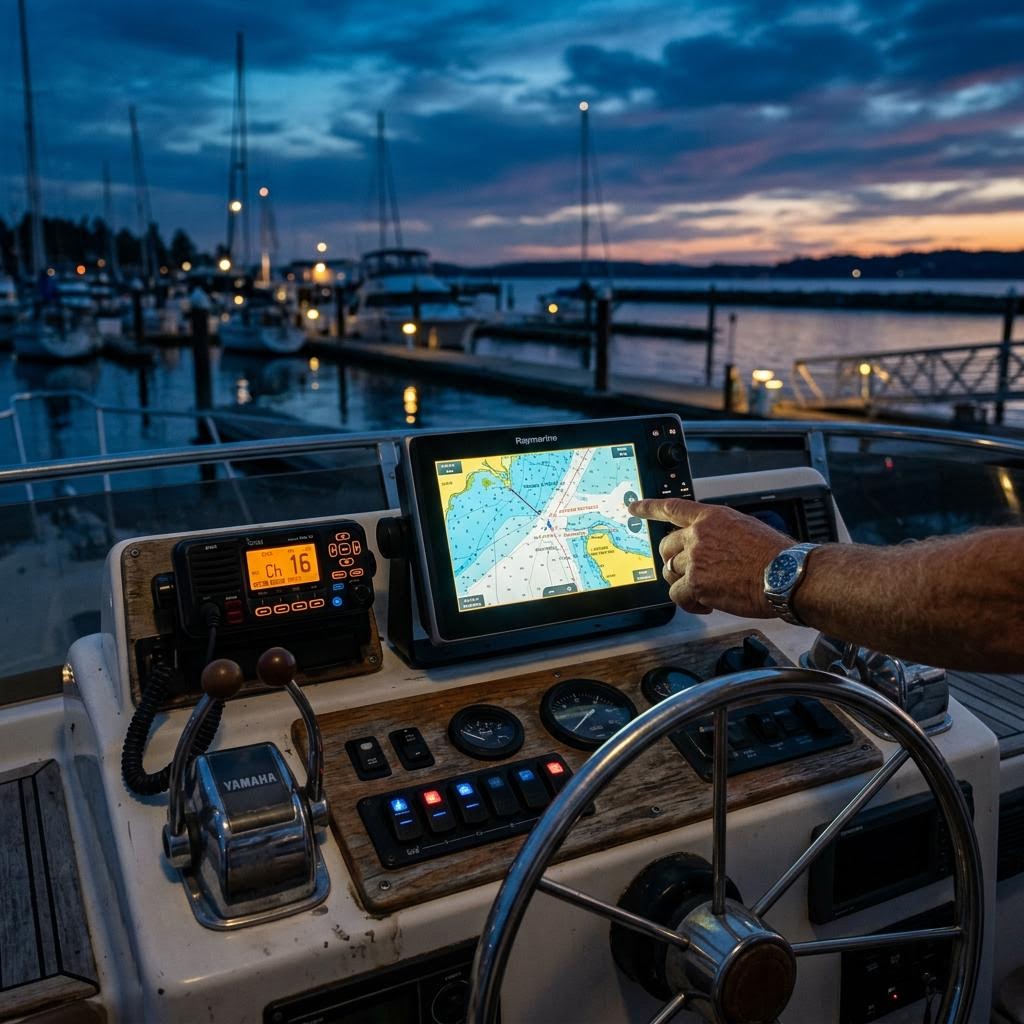
Modern marine electronics can look intimidating at the helm, but three devices cover most of what a new boater actually needs day to day: a GPS chartplotter, a VHF radio, and a depth sounder. Understanding what each one does — and does not do — is the fastest way to boat with confidence.
A GPS chartplotter shows your position over a digital nautical chart, letting you see channels, hazards, and your heading in real time. It is a navigation aid, not a replacement for paying attention: always cross-reference it with visual landmarks and buoys, and keep paper charts as backup in case of electrical failure.
A fixed-mount VHF radio is your primary safety tool on the water. Channel 16 is monitored by the Coast Guard and other vessels for hailing and distress calls — know how to reach it instantly. Unlike a cell phone, VHF range extends well beyond cell coverage and reaches every boat nearby at once during an emergency.
A depth sounder (or fishfinder with depth capability) warns you before you run aground and helps you find safe anchorages. Learn your boat's draft and set a shallow-water alarm a comfortable margin above it, especially in unfamiliar harbors or at low tide.
When shopping for your first setup, prioritize a chartplotter with your local chart coverage pre-loaded or easily added, a DSC-capable VHF radio wired to your GPS for one-touch distress calling, and a transducer sized correctly for your hull material and boat speed.