Solar Power for RVs: How Many Watts Do You Need?
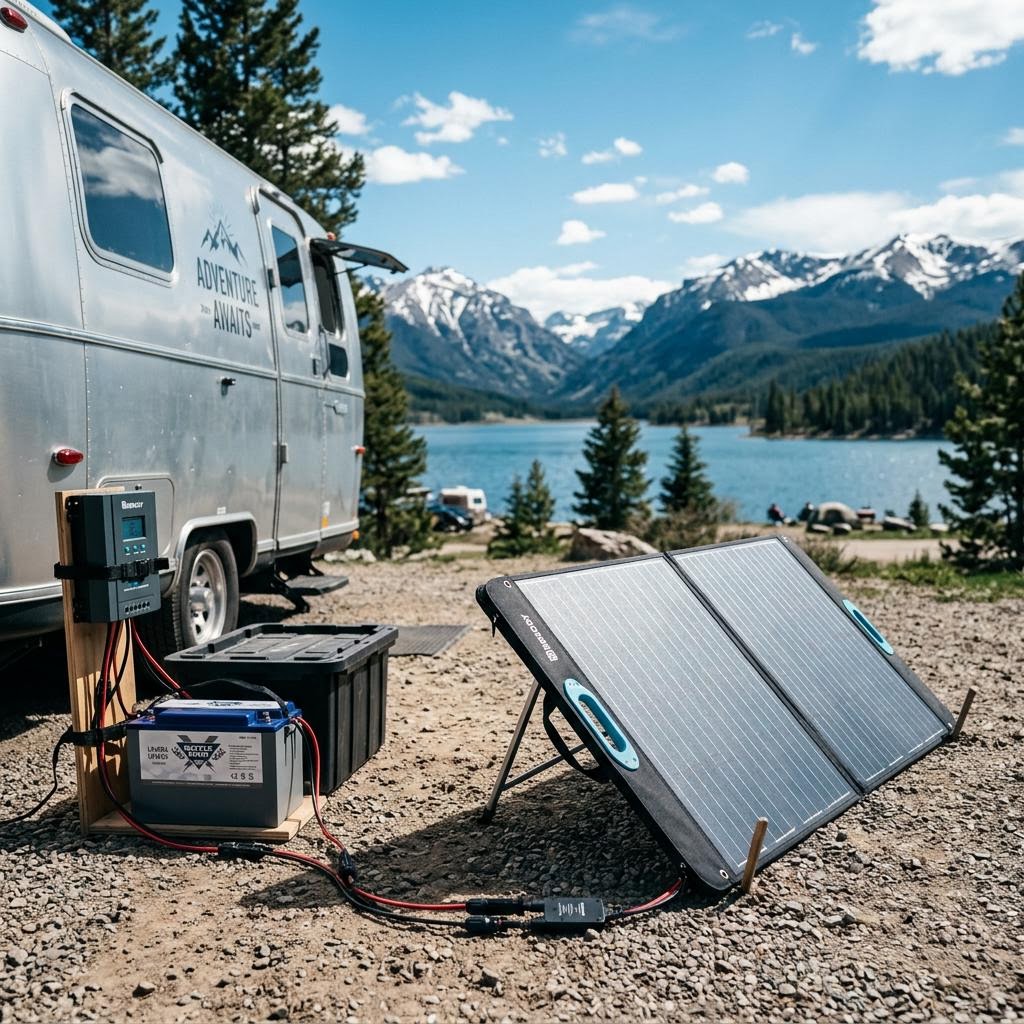
Sizing a solar system starts with your daily energy use, not with a panel wattage number you saw online. List every device you run — lights, water pump, refrigerator, fans, laptop chargers — and estimate the watt-hours each one uses per day. That total is your target for what solar needs to replace.
A rough rule of thumb: in good sun, a 100-watt panel produces about 300-400 watt-hours per day. If your daily draw comes out to 1,200 watt-hours, you are looking at roughly 300-400 watts of panel capacity, plus a margin for cloudy days and panel angle losses.
Battery capacity matters just as much as panel wattage. Lithium (LiFePO4) batteries can be discharged much deeper than lead-acid without damage, so a 100Ah lithium battery gives you closer to 100Ah of usable capacity versus roughly 50Ah on a comparable lead-acid battery. Size your battery bank to cover at least one to two days of use without sun.
Do not overlook the charge controller. An MPPT controller extracts meaningfully more power from your panels than a cheaper PWM controller, especially in cool weather or partial shade, and the efficiency gain often pays for the price difference within a season of regular boondocking.
Finally, plan your wiring for the load: undersized cable gauge and long unshielded runs both waste real power as heat. Match wire gauge to your system's amperage and run length, and always include a fuse or breaker close to the battery for both the panel and the load circuits.